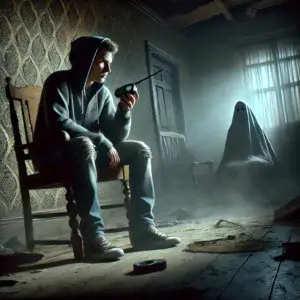
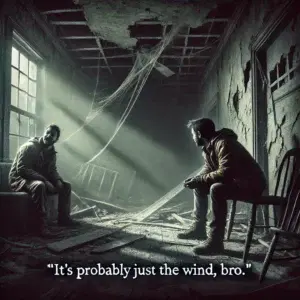
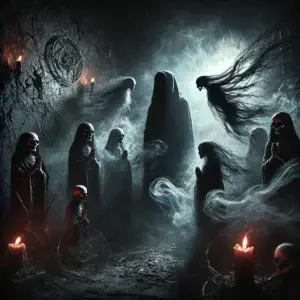
There’s a distinct kind of silence that settles when you turn off the lights in an unfamiliar place—your senses sharpen, your heartbeat becomes noticeable, and the room feels like it’s holding its breath. Some people call that imagination; others call it intuition.
Ghost hunting starts in that space, not with gadgets, but with attention. You’re not barging in looking for proof—you’re stepping into a place that may still hold someone’s presence, just not in the way we’re used to.
This is about understanding why people search for what lingers after death, and how to do it with respect, patience, and clarity. Let’s cross over..
The Signal Beneath the Noise
TL;DR
Ghost hunting isn’t about fancy gear or dramatic scares—it’s about stepping into the quiet, sensing subtle shifts, and showing respect for whatever might still linger. Start simple (local, familiar spots), be calm and curious, focus on what you actually feel (temperature shifts, silence, your gut) before tech, work in a grounded team, communicate gently if you try, interpret without forcing meaning, stay skeptical yet open, protect yourself emotionally, and remember: the point isn’t proof—it’s presence.
Summarize this content with AI
Where the Idea of Ghost Hunting Comes From
Long before EMF meters and thermal cameras, people sat quietly in rooms and paid attention to the things they couldn’t explain. Ancient cultures spoke to ancestors as if they were still there. Homes were built with altars. Food and incense were left out for the departed. Death wasn’t the end; it was just a shift in presence.
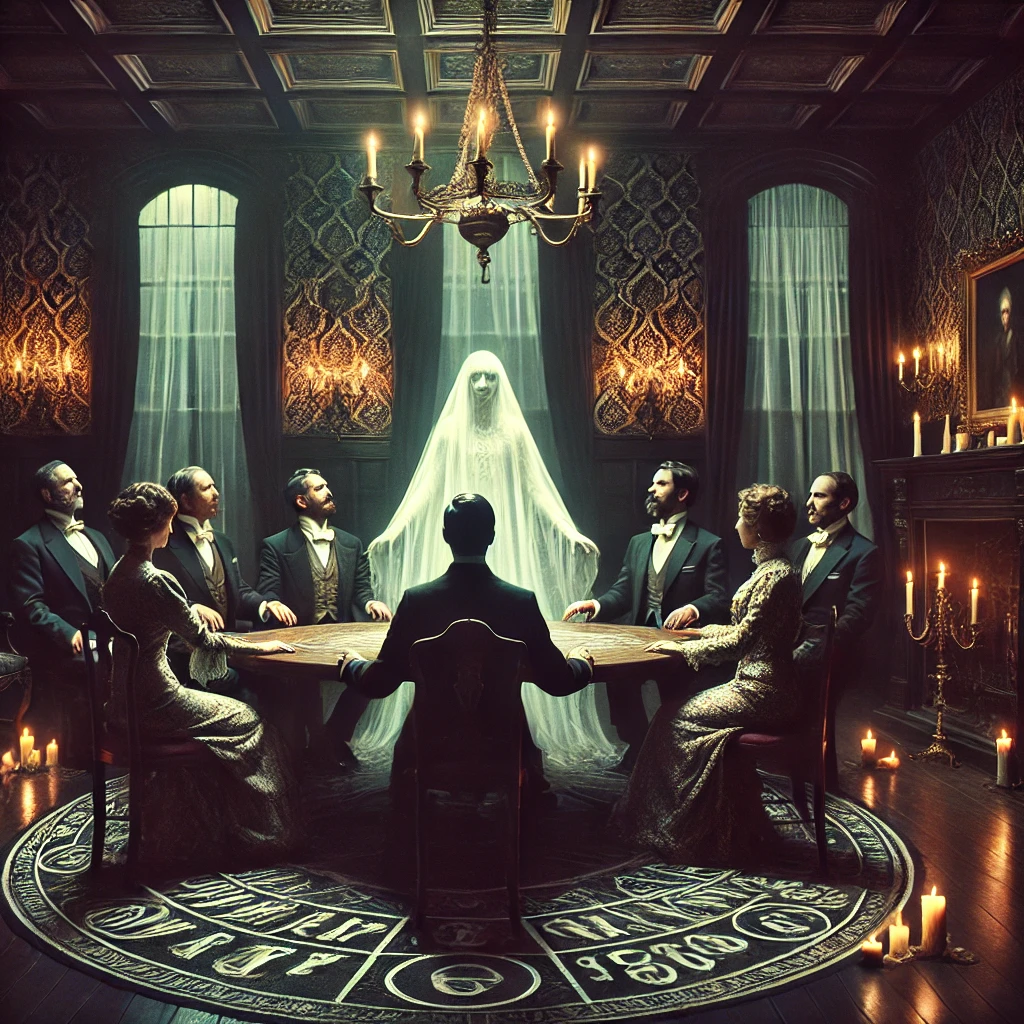
Western ghost hunting, however, took shape in the 19th century during the rise of Spiritualism—seances, mediums, table-rapping, and photography meant to reveal spirits standing behind the living. Some was deception. Some was sincere belief. But at the core was a very human desire:
We do not like endings. We want to know there is something more.
By the 20th century, ghost hunting became more scientific—or at least, scientific in intention. People wanted measurable proof: temperature drops, electromagnetic spikes, EVPs (electronic voice phenomena). The tools evolved, but the motivation stayed the same.
Modern ghost hunting sits somewhere between curiosity and reverence.
Not science. Not religion. Something in between.
The Core Principle: Go In With Respect
Movies have warped the approach. Ghost hunting is not about provoking or challenging whatever might be present. You don’t demand. You don’t shout. You don’t threaten.
If a spirit is real—and many believe some are—then it is simply a person without a body.
And the way we treat the invisible says a lot about who we are.
Your mindset matters more than anything else:
Go in calm, not hyped.
Go in patient, not thrill-seeking.
Go in curious, not convinced.
Respect deepens whatever experience you have—whether that’s something paranormal or simply a new understanding of your own perception.
Choosing a Location: Start Small, Start Local
Beginners often want to jump straight into abandoned asylums, forgotten prisons, or towns with folklore baked into their soil. Those places carry heavy emotional residue, and without experience, that weight can blur judgment.
Start somewhere familiar.
Good beginner-friendly locations:
A historic building or inn with known stories.
A friend’s family home with recurring odd reports.
A cemetery during the day or just after sundown.
An older local house that simply feels “off.”
Famous spots are crowded. Noise, people, and hype contaminate the atmosphere. A quiet, unremarkable room with history can hold more truth than any headline location.
People love gear: EMF detectors, night vision cameras, infrared thermometers, geophones, full-spectrum cameras, REM pods, SLS systems—the list is endless. Tools can be useful, yes, but tools also make beginners focus outward instead of inward.
Before reaching for equipment, first learn to read:
> Subtle temperature changes you can feel without gear
> Silence that feels present, not empty
> Your instincts as your first and most reliable tool
Your body has evolved over millions of years to detect subtle shifts. Trusting that is part of the experience.
When you do start using equipment, keep it simple.
Recommended Tools for Beginners:
A notebook and pen — for documenting details and impressions.
A voice recorder — to capture EVPs or ambient sound.
A camera (any decent one) — stills matter more than video.
A small flashlight — red light preferred to maintain night vision.
The goal isn’t to prove something happened. The goal is to observe honestly what did happen.
Go in With a Team of Three
One person gets overwhelmed. Two people mirror each other’s reactions. Three creates balance.
With three, you can:
Have a neutral observer.
Rotate roles.
Cross-check impressions in real time.
Everyone should share a mindset before walking in. If someone just wants to get scared, they will set the tone—and fear is contagious in the dark. Choose people who are grounded, calm, and capable of silence.
Silence is key. Most of ghost hunting is waiting.
Entering the Space: Slow Down
When you first step inside a location, don’t talk. Don’t flash lights everywhere. Don’t ask questions immediately.
Stand still. Let the room meet you.
Notice:
The temperature.
The smell.
The pressure in the air.
The feeling in your chest.
Some rooms feel like they are watching you back. Some feel hollow, emptied out long ago. Some feel welcoming, like you’ve been there before.
Take your time. The unseen does not operate on our schedule.
Communication: Asking Without Forcing
If you choose to attempt communication, speak like you would to a stranger sitting quietly in the corner.
Simple. Clear. Human.
Examples:
“Is anyone here with us?”
“We’re listening.”
“You don’t have to show yourself. Just let us know you’re here.”
“We mean no harm. We’re just here to understand.”
Avoid these:
“Make a noise if you’re real.”
“Show yourself right now.”
“We command you to appear.”
Anything that tries to assert dominance rarely ends well, and even when it appears to work, the energy that answers may not be what you think.
Pay Attention to Subtle Signs
Ghost hunting is less about dramatic apparitions and more about the quiet, almost-ordinary moments that feel wrong in a very specific way.
Common subtle experiences:
A room that suddenly feels crowded, though no one has moved.
An area of cold that follows you rather than stays still.
A sudden emotional drop—sadness, anger, or “being watched.”
Faint tapping or shifting that seems to respond to presence.
A whisper or breath caught only on recording playback.
These are not proof. They are data points.
You collect them. You compare them. You stay open, not convinced.
Interpreting What Happens
Two people can have the same experience and explain it differently.
One might say: “It was just the house settling.”
The other might say: “That room wanted us gone.”
Neither is necessarily wrong. Ghost hunting is not about certainty. It is about encounter.
You will not walk away with clean, tidy evidence.
You will walk away with a story, and stories linger.
The Role of Skepticism
A good ghost hunter is skeptical—not dismissive, just grounded. The brain is excellent at filling in gaps, especially in the dark. If you hear a voice, replay the audio. If you feel a presence, check for drafts or sound reflections.
Look for alternatives before embracing the paranormal.
Respecting the unknown means acknowledging that not everything unexplained is supernatural—and not everything supernatural is dangerous.
The goal is balance. Neither believer nor cynic alone sees clearly.
Protecting Yourself Emotionally and Energetically
Whether or not spirits are real in the literal sense, the human mind reacts strongly to darkness, silence, and suggestion. Emotional protection is important.
Before entering a location, ground yourself:
Take deep breaths.
Remind yourself why you’re there.
Keep your thoughts steady.
If at any point something feels wrong—not creepy, not thrilling, but wrong—step out. There is no reward for pushing past intuition.
Leaving is not weakness. It is self-respect.
Why People Still Do This
Why walk into cold basements and empty attics searching for someone who isn’t supposed to exist?
Because death unsettles us.
Because grief leaves questions behind.
Because the world is bigger and stranger than we pretend.
Ghost hunting is not really about ghosts.
It is about:
Facing the quiet.
Listening instead of talking.
Seeing without needing to own or explain.
It’s the opposite of entertainment. It’s an exercise in presence.
And presence, in a world full of noise, is rare.
Why It Matters Now
We live in a time where everything has to be loud to be believed. Ghost hunting asks you to be still. It teaches patience, attention, humility, self-awareness. Whether you encounter something or not, the process itself changes how you navigate the world.
You start noticing details. You learn to trust your senses. You realize how much life happens in the unseen spaces.
Ghost hunting is, at its core, a practice of remembering that not everything real is visible.
Some things are felt first.
Some things are understood later.
Some things are never fully explained at all.
Closing Reflection
If you go looking for ghosts, you may not find one. You may instead find something more subtle—an echo of history, a mirror of your own fears, or a quiet reassurance that existence does not end, it only transforms.