Some stories don’t begin with evidence. They begin with a feeling.
A quiet suspicion that something has always been watching.
The Black Knight Satellite sits precisely in that space — the intersection between open sky and open uncertainty. Sometimes called a “mystery object in polar orbit,” sometimes framed as a relic, a probe, or a silent observer from an older intelligence, it’s a phenomenon that refuses to settle into a single explanation. It lingers — in photos, in recorded sightings, in transmissions, and in the collective imagination — because it never fully resolves.
This isn’t about proving anything. This is about tracing the shape of the unknown as honestly as possible.
The Signal Beneath the Noise
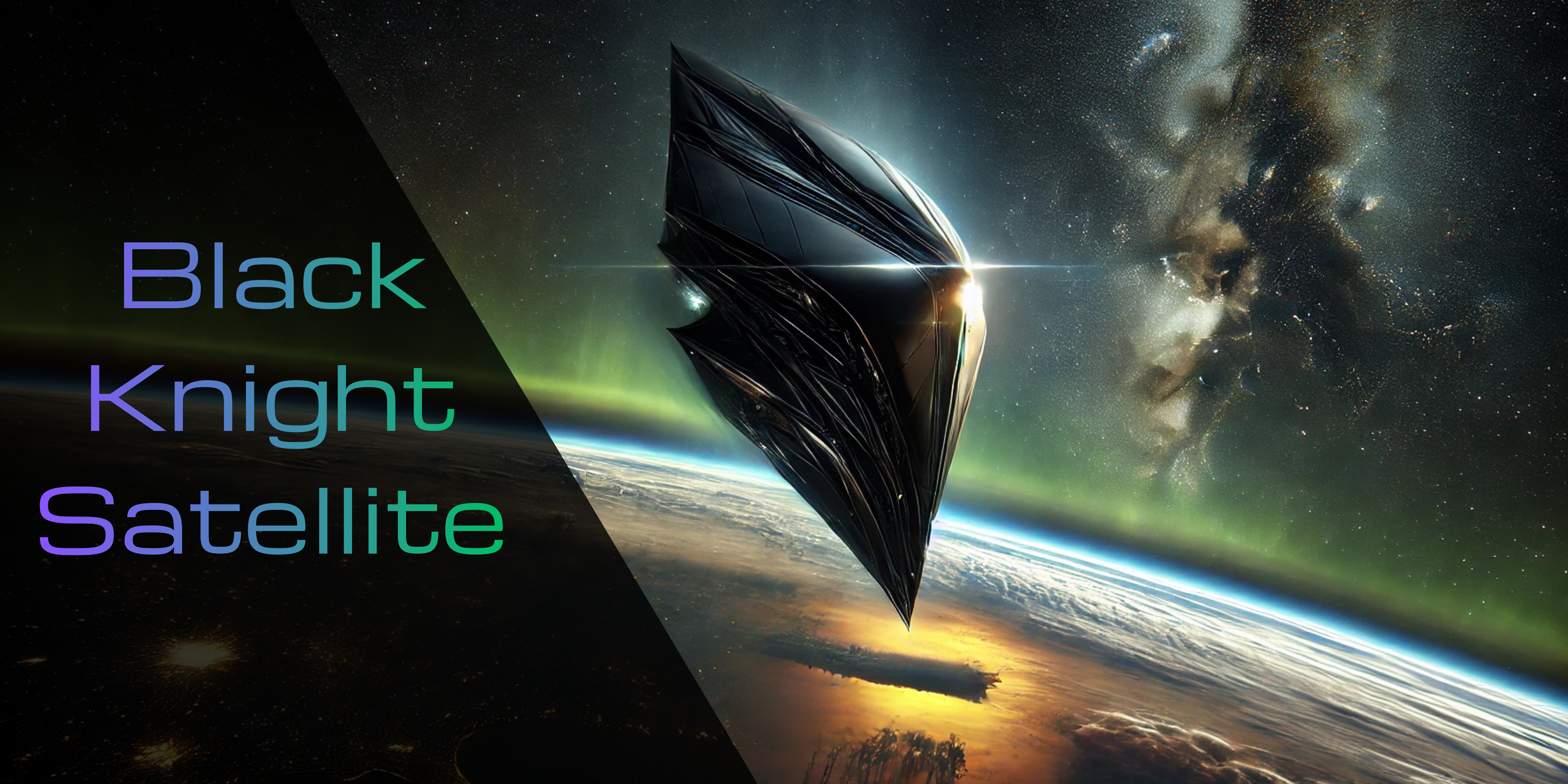
The Black Knight Satellite is said to be an object moving in a strange orbit around Earth, linked to early radio signal anomalies, Cold War radar reports, and the well-known 1998 NASA photos. People interpret it in different ways—some see it as an alien probe, others as a relic of an ancient human civilization, a covert military device, or simply space debris mistaken for something more. Its real weight comes from how it challenges our assumptions about history, technology, and what counts as evidence. Real or misinterpreted, it endures because it speaks directly to instinct, curiosity, and the sense that not everything in our sky has been explained.
Summarize this content with AI
The First Glimpses: Before We Had the Language For It
The story doesn’t start in the modern age.
The earliest threads go back centuries.

Some point to Nikola Tesla — who, in 1899, reported detecting strange repeating radio signals while experimenting with wireless power transmission in Colorado Springs. Tesla believed he was receiving something intentional — a signal from somewhere out in space. It was dismissed at the time as miscalculation or misinterpretation. Yet decades later, similar unexplained radio signals would be noted by ham radio operators across the world.
Others reference the ancient stories — the myths of sky-watchers, metal birds, messengers that circle from above. Cultures separated by distance and time, all describing something from the sky that observed quietly, without interference.
These early threads don’t prove anything.
But they set a tone — something old, something patient, something watching.
Then came the photographs.
The Modern Emergence: NASA, STS-088, and the Object in the Dark
The Black Knight Satellite entered mainstream awareness in the mid-20th century — during the height of the Cold War and early space exploration. Radar operators tracked “a dark object” in polar orbit — an orbit that neither the United States nor the Soviet Union were known to use at the time. The military noted it. Scientists debated it. Journalists wrote about it with caution.

But nothing definitive came of it.
Then in 1998, during NASA’s STS-088 mission, astronauts photographed an object floating against the blackness of space. The images spread quickly when leaked and later released in various official image galleries. The object didn’t look like a satellite. It didn’t look like space junk. It had edges — shape — structure. Almost like something engineered.
NASA labeled it thermal insulation — a piece of protective material that drifted away.
Some accepted this explanation.
Many didn’t.
Because the shape didn’t look accidental.
And the story didn’t feel closed.
Claims and Interpretations: What People Say It Might Be
When people speak about the Black Knight Satellite, the interpretations tend to fall into several categories. Each tells us something different — not just about the object, but about how humans interpret the unknown.
1. An Extraterrestrial Probe
One common interpretation suggests the object is a probe — something placed in orbit intentionally. Not as a weapon. Not as a beacon. But as a watcher. A long-term observer. Possibly older than human civilization itself.
If true, it may not be active. Or, more unsettling — it may be active in ways we simply cannot detect.
2. A Relic of an Ancient Human Civilization
Some view the Black Knight as a technological fossil — evidence that human history is longer, stranger, and less linear than we’ve been told. A remnant of a previous age, wiped out by something we can only guess at.
This interpretation treats the satellite not as alien, but as familiar.
Which can feel even more unsettling.
3. A Classified Military Device
A grounded, skeptical explanation suggests it’s a spy satellite or covert surveillance platform — one never intended to be acknowledged. Governments deny many things they develop, especially during competitive or tense eras.
This explanation is technically plausible, but falls short of explaining sightings reported decades before the technology existed.
4. A Misidentified Object or Space Junk
The most conventional viewpoint is that the Black Knight is simply debris — a discarded panel or equipment fragment that took on an interesting shape.
This is the conclusion many organizations support officially.
But the problem is repetition.
Debris doesn’t stay stable.
Stories usually die when explanations are sufficient.
This one hasn’t.
What Is the Significance of the Black Knight Satellite?
The significance isn’t simply in whether the object exists — it’s in what the idea represents.
It lives at the boundary of modern uncertainty:
- The limits of what we know about space
- The edges of what we trust from institutions
- The feeling that we are observed rather than alone
It forces the question:
If something non-human has been watching us, what does that imply about our place here?
The Black Knight reaches into something deeper than science or evidence. It reaches into instinct — the part of us that senses when we are not alone.
The significance is not the object.
It’s the awareness the object provokes.
The Debate and the Quiet Middle Ground
There are always two loud sides:

- Those who demand it is alien technology
- Those who insist it is nothing at all
But most people don’t live in either of those extremes.
There is a quieter position:
We don’t know, and that’s worth paying attention to.
This is the space the Black Knight occupies — an unresolved symbol. Not a declaration. Not a conclusion. Just a shape in the dark that doesn’t fit neatly into any existing category.
And sometimes, it’s the things that don’t fit that matter most.
Future Implications of the Black Knight Satellite
Whether the Black Knight is debris, a relic, a probe, or something else entirely, the implications are significant.
If It’s Artificial and Non-Human
Human history is not what we think it is.
Our timeline is not fixed.
We are part of a larger conversation we did not know we were in.
If It’s Human Technology
Then the gap between public knowledge and private capability is larger than assumed — perhaps decades. That reshapes how we view progress, power, and transparency.
If It’s Misidentified Debris
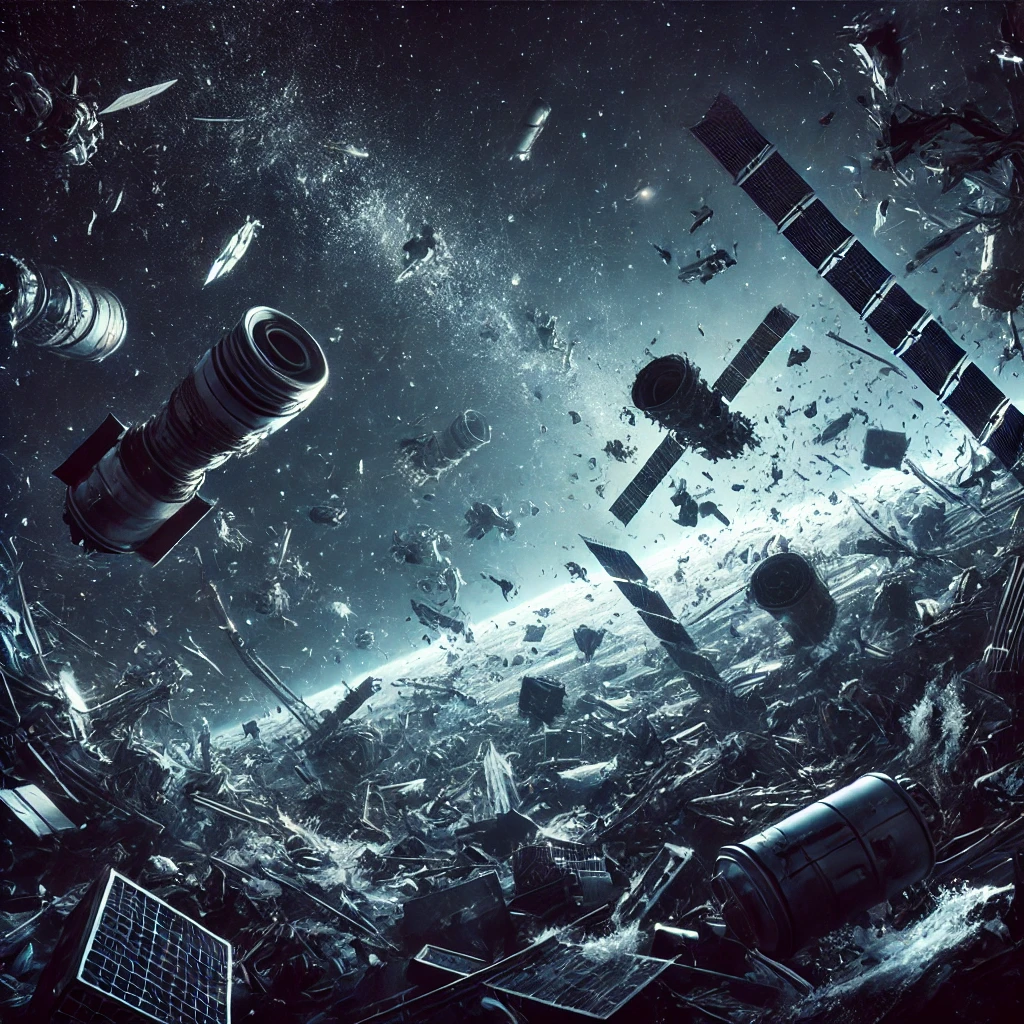
Then the mystery remains psychological — a mirror reflecting our instinct to search for meaning in the unknown.
None of these outcomes are small.
The Black Knight forces awareness.
Awareness forces change.
Even ambiguity can shift an entire worldview.
Why This Matters Now
The modern world is noisy — overloaded with information, explanations, and answers delivered before the questions are even fully formed. The Black Knight cuts through that. It’s a reminder that there are still things we cannot easily name, classify, or explain away.
It keeps curiosity alive.
It keeps wonder intact.
It keeps a part of the mind open — the part that notices things.
Because the moment we decide everything is already known, discovery ends.
And that’s when something ancient, quiet, and patient finally steps forward.
Closing Reflection
The Black Knight Satellite endures not because we have proven it, but because we haven’t destroyed the possibility of it. It lives in the space between certainty and imagination.
Maybe it’s watching.
Maybe it’s waiting.
Maybe it’s just a shadow in the shape of meaning.
Some mysteries aren’t meant to be solved.
They’re meant to be remembered.