The ocean hides more than we realize, even with all the tools we’ve built to study it. Depth and pressure create a world where most activity stays out of reach, but occasionally something cuts through the silence.
In 1997, a strange sound did exactly that, echoing across thousands of miles of the Pacific. It rose in pitch fast, carried immense power, and didn’t match any known underwater source.
Researchers eventually called it the Bloop, and it quickly became a source of speculation, debate, and curiosity.
Even with later explanations, its story lingered, and this article explores how it began, how such sounds are analyzed, the theories surrounding it, and why the mystery still matters.

The Signal Beneath the Noise
The Bloop was an unusually powerful underwater sound recorded in 1997, notable for its massive range and fast, rising pitch. Researchers eventually suggested it came from large ice fracturing in the South Pacific, but the explanation never fully quieted the curiosity because the sound didn’t perfectly match typical ice events. Its scale, mystery, and the limits of deep-ocean knowledge kept the story alive. Today, the Bloop remains a symbol of how much of the ocean is still unknown and how a single unexpected signal can capture the imagination for decades.
Summarize this content with AI
Where the Bloop Came From
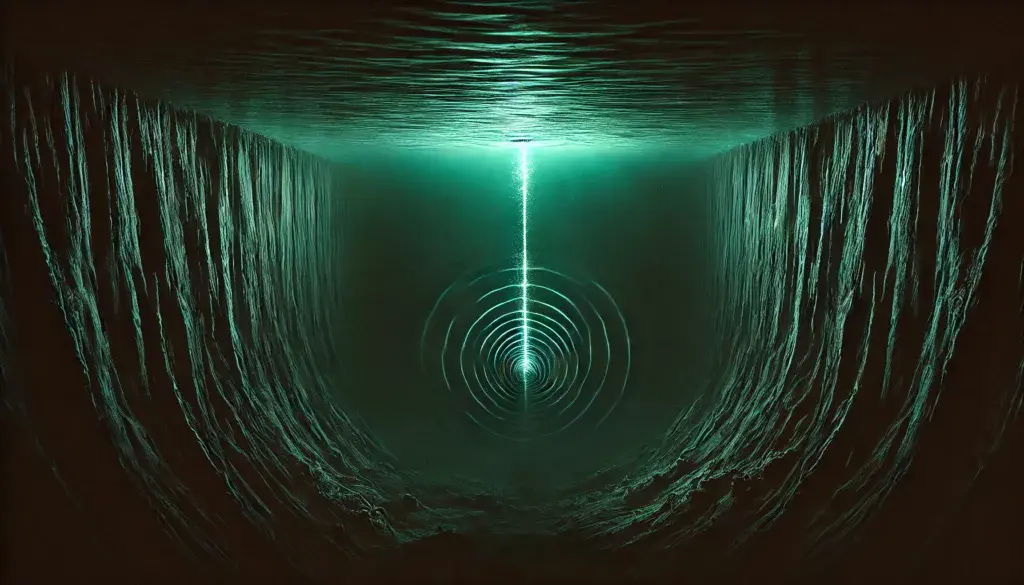
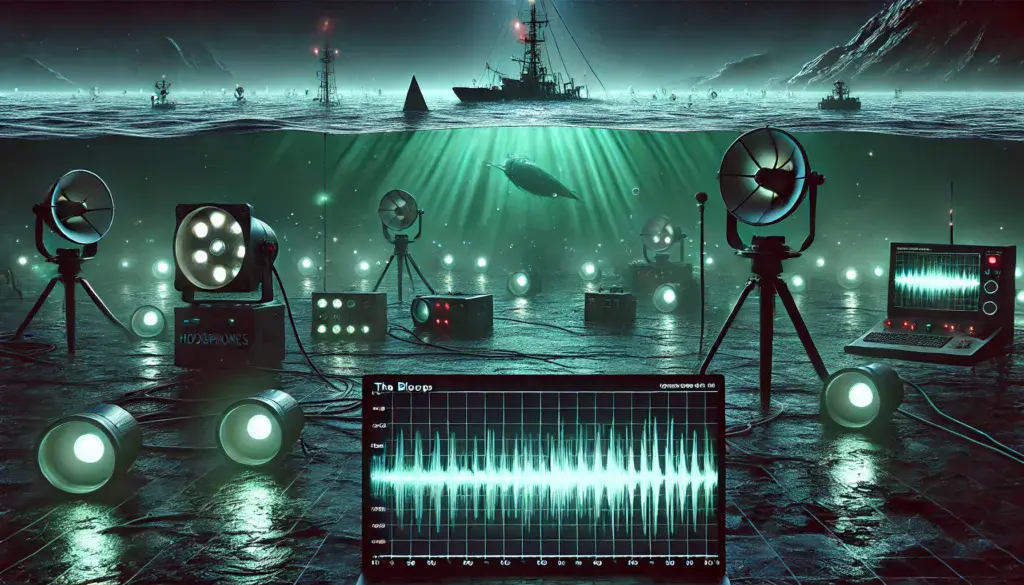
In the summer of 1997, NOAA’s deep-ocean listening network picked up something unusual. The hydrophones—underwater microphones spread across the Pacific—were built to detect distant disturbances. Most of the time, they caught typical signals:
- earthquakes
- whale calls
- volcanic rumbles
- ice cracking
- ship noise
But the Bloop stood out immediately.
It was:
- extremely loud
- detectable over huge distances
- short, under a minute
- rising in pitch in a way not easily matched to known sources
The origin point was mapped to a remote part of the South Pacific. It was a quiet, empty stretch of ocean, far from major shipping routes and far from regular human activity.
At the time, there was no clear match for it—and that’s where the story began.
How Sound Moves Underwater
Understanding the Bloop requires understanding how sound behaves in deep water. It doesn’t move like it does in air.

A few key differences explain why the Bloop puzzled people:
- Sound travels much faster underwater—around four to five times faster than in air.
- Low frequencies travel enormous distances, sometimes entire ocean basins.
- Temperature, pressure, and salinity affect sound, bending and redirecting waves in ways that distort what was originally emitted.
Because of all this, when a sound is detected thousands of miles away, one thing is certain:
It came from something powerful.
Either something physically large created it, or something happened with enough force to make the ocean itself carry the signal outward.
That’s what made the Bloop so striking.
How Unexplained Ocean Sounds Are Analyzed
When researchers encounter a strange underwater signal, they don’t jump to conclusions. The process is slow, structured, and data-driven. It usually looks like this:
1. Turning the sound into a spectrogram
This visual representation lets scientists compare frequency patterns side-by-side with known recordings.
2. Triangulating the location
Multiple hydrophones detect the sound at slightly different times. Using those time differences, scientists calculate the approximate source.
3. Comparing to known categories
The sound is checked against:
- marine mammals
- ice movement
- volcanic activity
- seismic events
- human-made signals
4. Considering environmental conditions
Ocean state, temperature layers, and pressure zones all influence what a signal looks like after traveling long distances.

5. Narrowing possibilities rather than declaring certainty
Most underwater mysteries don’t get solved instantly. They get slowly chipped away at until only a few reasonable explanations remain.
The Bloop remained unusual for a long time because it didn’t lock cleanly into any existing category.
The Interpretations and the “Bloop Conspiracy”
The Bloop entered public awareness in an era where the internet was growing fast and information spread quickly. With few early answers, speculation filled the gap. A handful of ideas rose to the surface.
1. A massive unknown creature
Some early researchers noted how the frequency pattern resembled biological calls. But the size implied by the recording didn’t match any known species. That led to speculation about:

- an unknown giant marine animal
- a long-lost prehistoric lineage
- a deep-ocean species beyond current biology
People were fascinated because the ocean is still wide open for surprises.
2. Geological activity
Underwater volcanic events can create low-frequency pulses. But this explanation didn’t perfectly match the Bloop’s rapid pitch rise.
3. Ice-related events
Large ice masses breaking apart can generate extremely powerful, wide-ranging sounds. NOAA eventually leaned toward this explanation years later, pointing to patterns resembling massive ice fracturing near Antarctica.

Even then, some remained unconvinced because the signature wasn’t an exact match.
4. Classified or unknown human activity
When a sound is unusual, loud, and global, people naturally wonder whether testing or operations outside public knowledge might be involved. There’s no evidence either way, which is exactly why the idea persists.
5. Cultural influence
The Bloop’s location and timing fed into existing ocean myths and fictional stories. Even people who didn’t believe in anything extraordinary still found the coincidence interesting.
These interpretations weren’t just about the sound—they were about the gaps in what we know.
Why the Official Conclusion Didn’t End the Story
Years after the Bloop was first detected, NOAA announced that the sound was likely the result of large icebergs cracking or breaking apart. It was a grounded explanation based on accumulating research.
So why does the conversation continue?
Because:

- the Bloop didn’t match icequake recordings perfectly
- the ocean is still largely unmapped
- the sound was unusually loud compared to typical ice movements
- the early mystery created momentum that never fully went away
- people are naturally drawn to events that resist simple answers
Some mysteries fade once explained. Others stay alive because the explanation, while plausible, doesn’t entirely satisfy everyone.
The Bloop falls into the second category.
The Bloop and Other Unexplained Ocean Sounds
The Bloop wasn’t a one-off event. Over the years, NOAA has captured several strange underwater sounds:
- Upsweep
- Slow Down
- The Train
- Whistle
- Julia
Some have proposed explanations. Some haven’t. The deeper the Pacific, the more unusual the acoustic landscape becomes. It’s not a quiet place—it’s a place filled with pressure, grinding, movement, and life.
The Bloop is part of a broader pattern: the ocean regularly produces signals that challenge what we expect.
How to Understand the Bloop Sound Phenomenon
For anyone trying to form a grounded view of the Bloop, here’s a simple approach:
1. Look at the original data
The spectrogram tells more than any headline.
2. Compare it to known geological and biological patterns
This helps show what it resembles—and what it doesn’t.
3. Consider the scale
A sound heard across the Pacific wasn’t caused by anything small.
4. Factor in how sound changes as it travels
The deep ocean bends and distorts signals.
5. Accept uncertainty when it remains
Uncertainty isn’t a weakness—sometimes it’s the most honest option.
This isn’t about siding with the conspiracy or the official explanation. It’s about recognizing how limited and fascinating underwater acoustics can be.
Why the Bloop Still Matters
People don’t talk about the Bloop decades later because they expect a final answer. They talk about it because of what it represents.

1. A reminder of how little we know
The ocean remains one of the least understood parts of our planet.
2. A story that blends science and mystery
The Bloop sits at the crossroads between hard data and open interpretation.
3. A signal from a world we rarely see
Most of Earth’s life, pressure, and movement happens in the dark.
4. An example of how stories grow
The Bloop evolved from a scientific puzzle into a cultural touchpoint.
5. A moment where the deep ocean reached out
Whatever the source, the sound traveled far enough to reach us.
That alone makes it significant.
Closing Thoughts
Whether the Bloop was ice shifting under stress or something we haven’t fully mapped yet, its impact comes from the space it occupies in the imagination. It showed that a single sound—less than a minute long—could raise questions that last for years.
And it reminded people that the world is still capable of surprising them.
A Quiet Return to Beard Craft
And even with all the noise and uncertainty echoing from the deep, there’s still the quiet work we return to on the surface. The small rituals that keep us centered — tending to the beard, the skin, the way we carry ourselves. The ocean keeps its secrets, but the way we care for ourselves doesn’t have to be a mystery.